
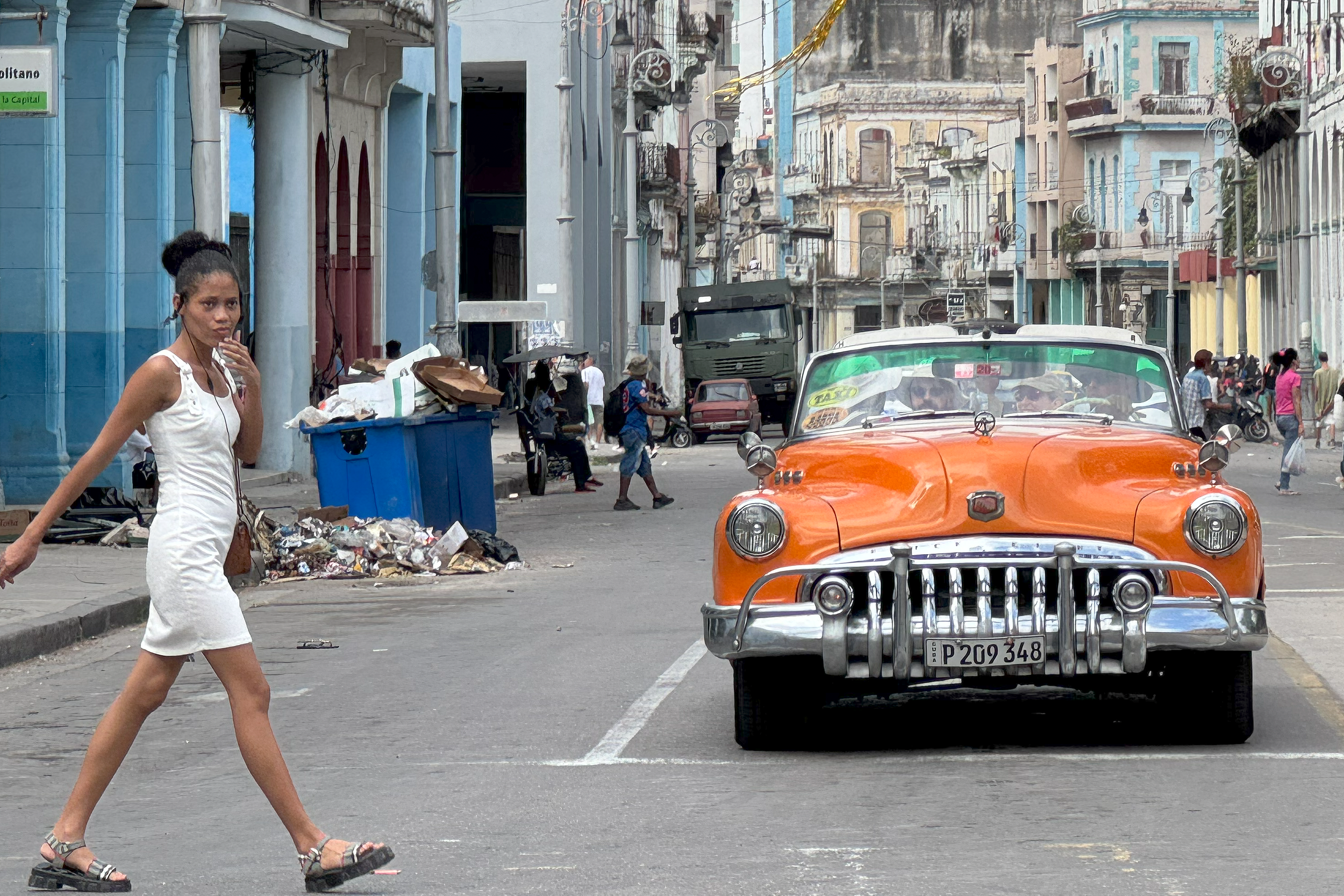
1950 Buick Super Convertible, Background: Polaquito y Army Truck
MAQUINAS
Cuba suffers from a trifecta of woes: an inept and corrupt government, a 65-year, U.S.-led embargo, and a suffering population that is simultaneously a victim of the first two woes and numb to change as it strives daily to make ends meet. Electricity shortages, crumbling buildings, and non-potable water are just a few of the major impediments to economic growth for Cubans. Long a major producer of sugar, Cuba now imports it to meet domestic demand. Similarly, rice, a staple food of Cuban cuisine, is also imported. Earnings from traditional exports like cigars and rum have waned to the point that medical professionals are now the main export from Cuba. With the average wage at $220 annually, keeping the educated class in-country has been a major challenge. Once again, mass emigration is spiking as many impoverished Cubans see the country as a lost cause. While these conditions are some of the worst the nation has seen since the collapse of the USSR, the majority of Cuban people have endured through grit and resourcefulness.
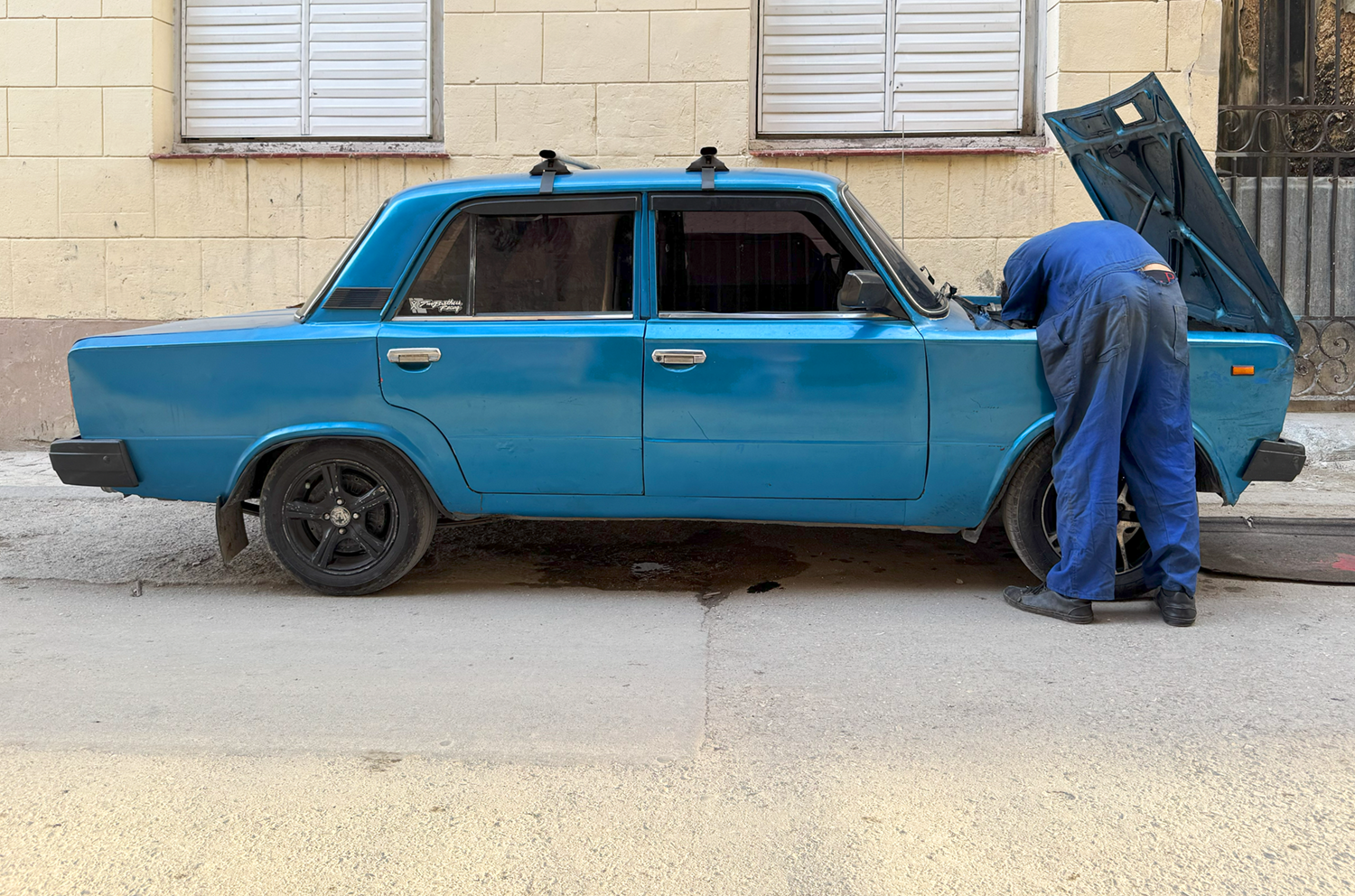
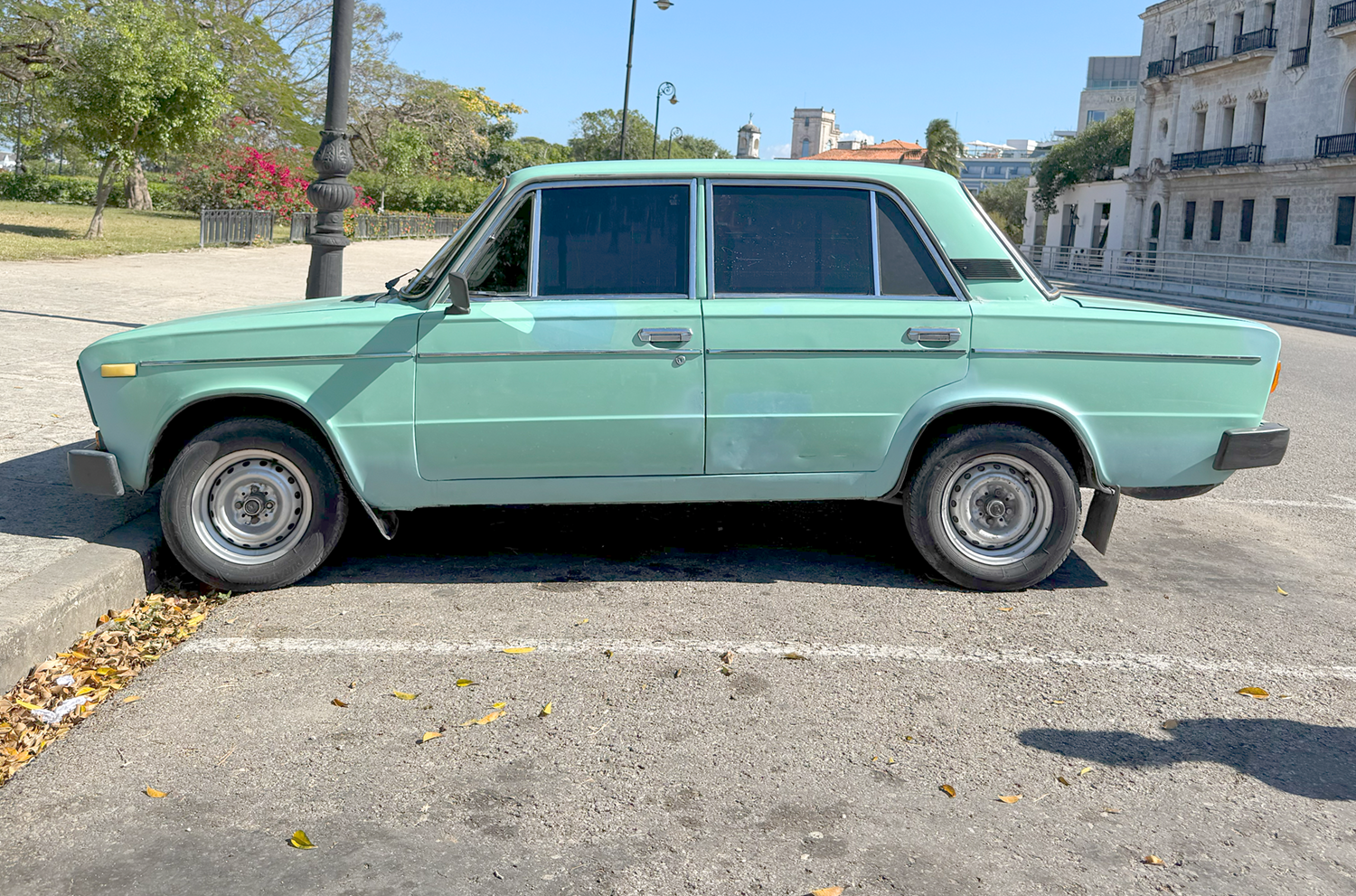
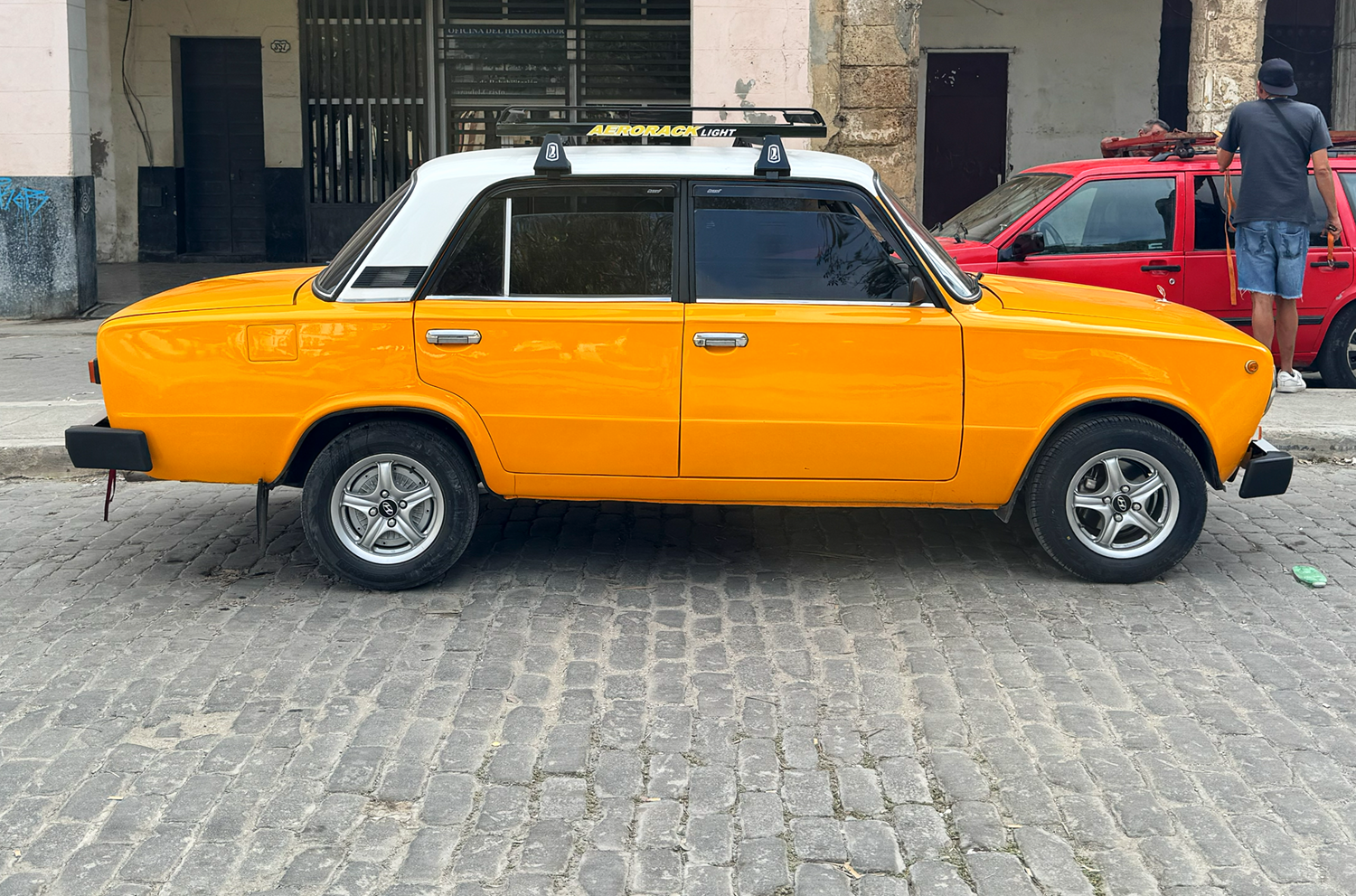
1981 Lada Zhiguli 1600/ VAZ-2106
And it is those attributes that have kept the pre-embargo cars running. The 1960 U.S. embargo of Cuba immediately ceased the importation of American cars and automobile parts. Although some Soviet bloc countries exported cars, including Polish versions of the Fiat that the Cubans called Polaquitos, those cars were expensive for the average Cuban and poorly built.
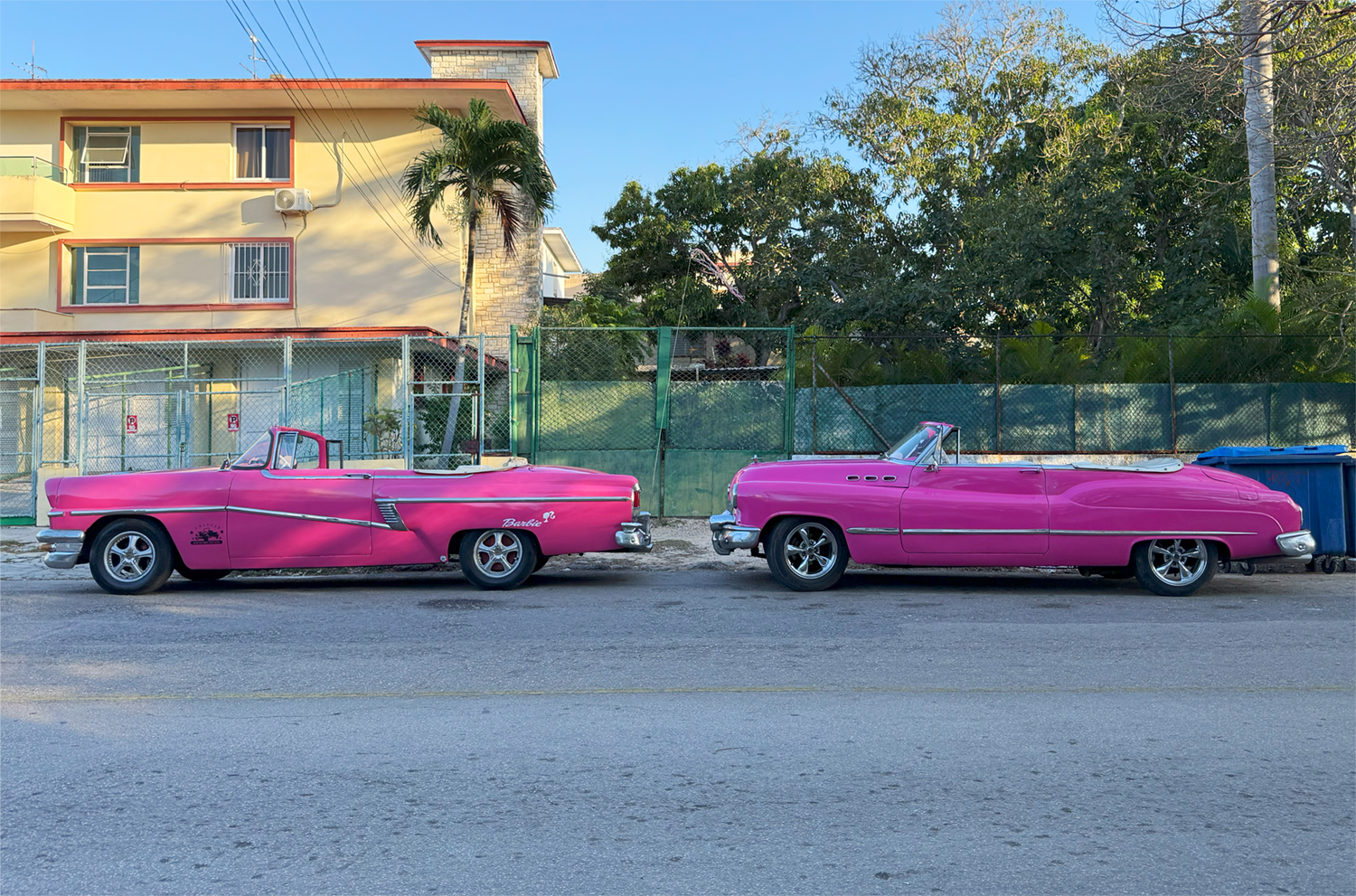
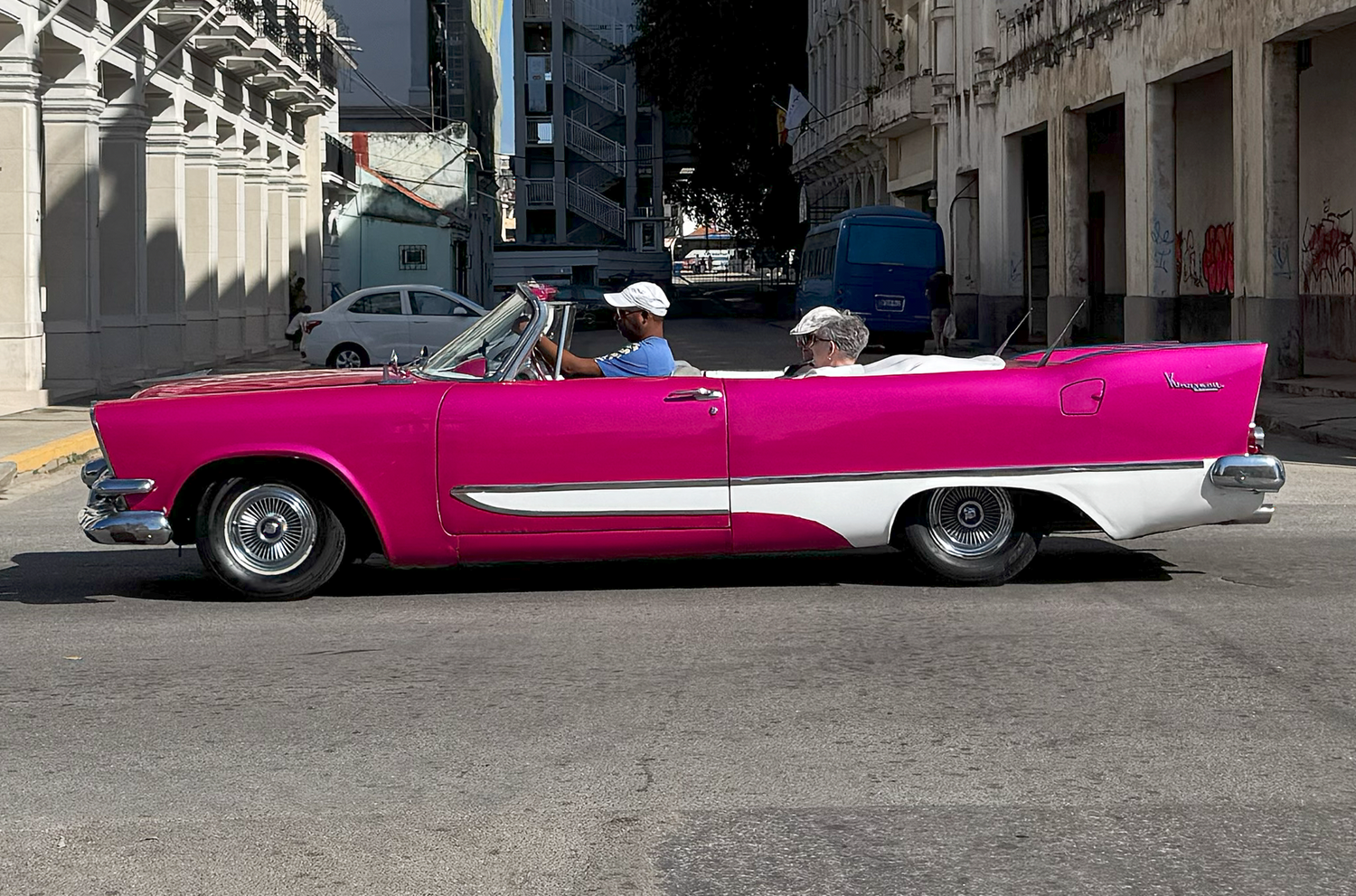
1957 Pontiac Bonneville convertible y 1950 Buick Roadmaster
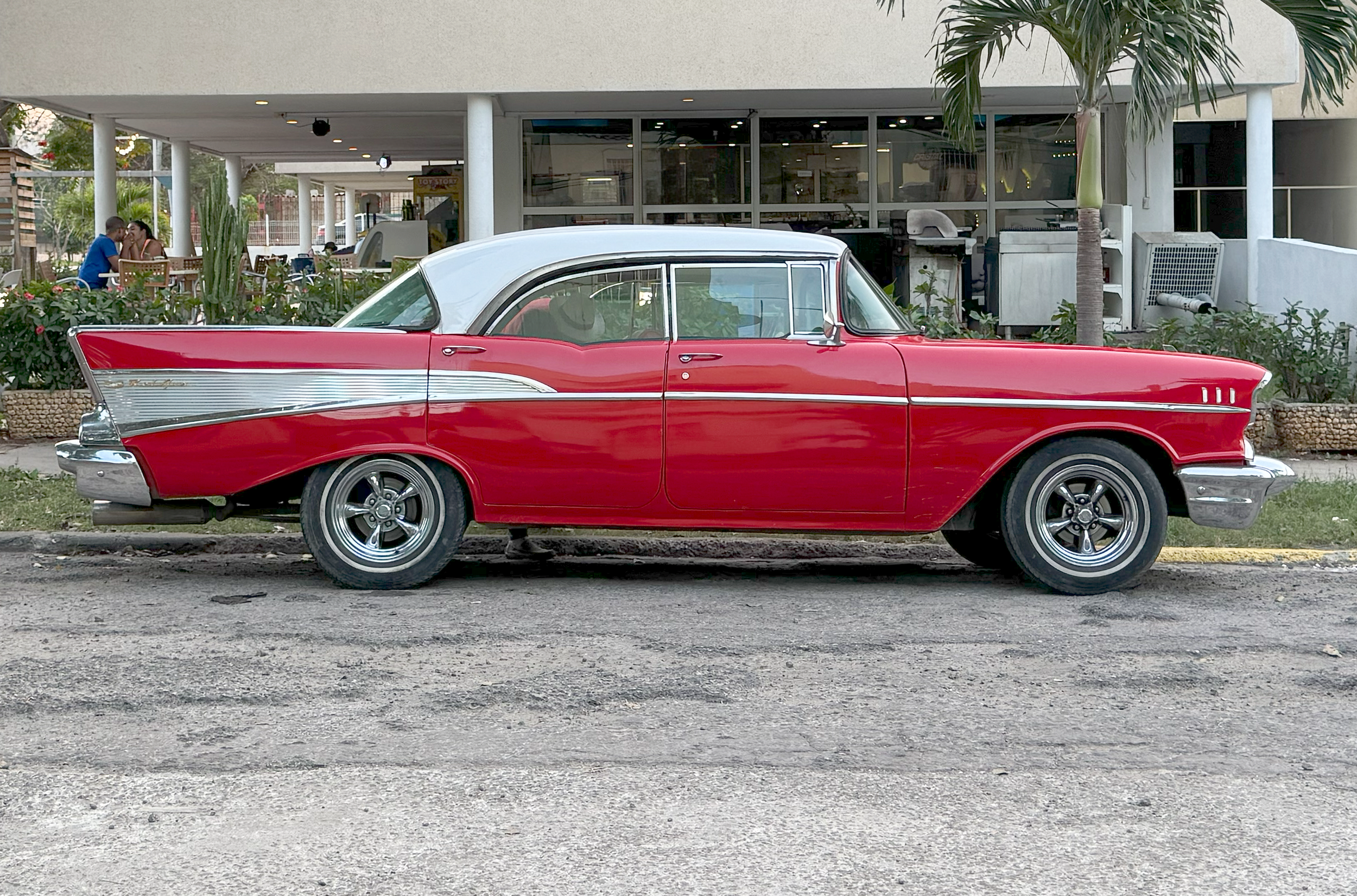
Car mechanics became artists and surgeons the likes of which only Mary Shelley could imagine. A headlight here, a taillight there. A door trim from that Chevy, bent and modified to fit that other car produced the year after. A glass windscreen brought from Cienfuegos. A passenger door from a Plymouth Deluxe that traversed the Gulf of Mexico to Cuba like Castro’s Granma yacht in 1956. Dissimilar vehicles like tractors and related agricultural vehicles had their housings removed and transformed into Chevy Bel Air trunk lids. A late 1940s Pontiac coupe had a boat engine transplant, like a pig heart in an aged patient.
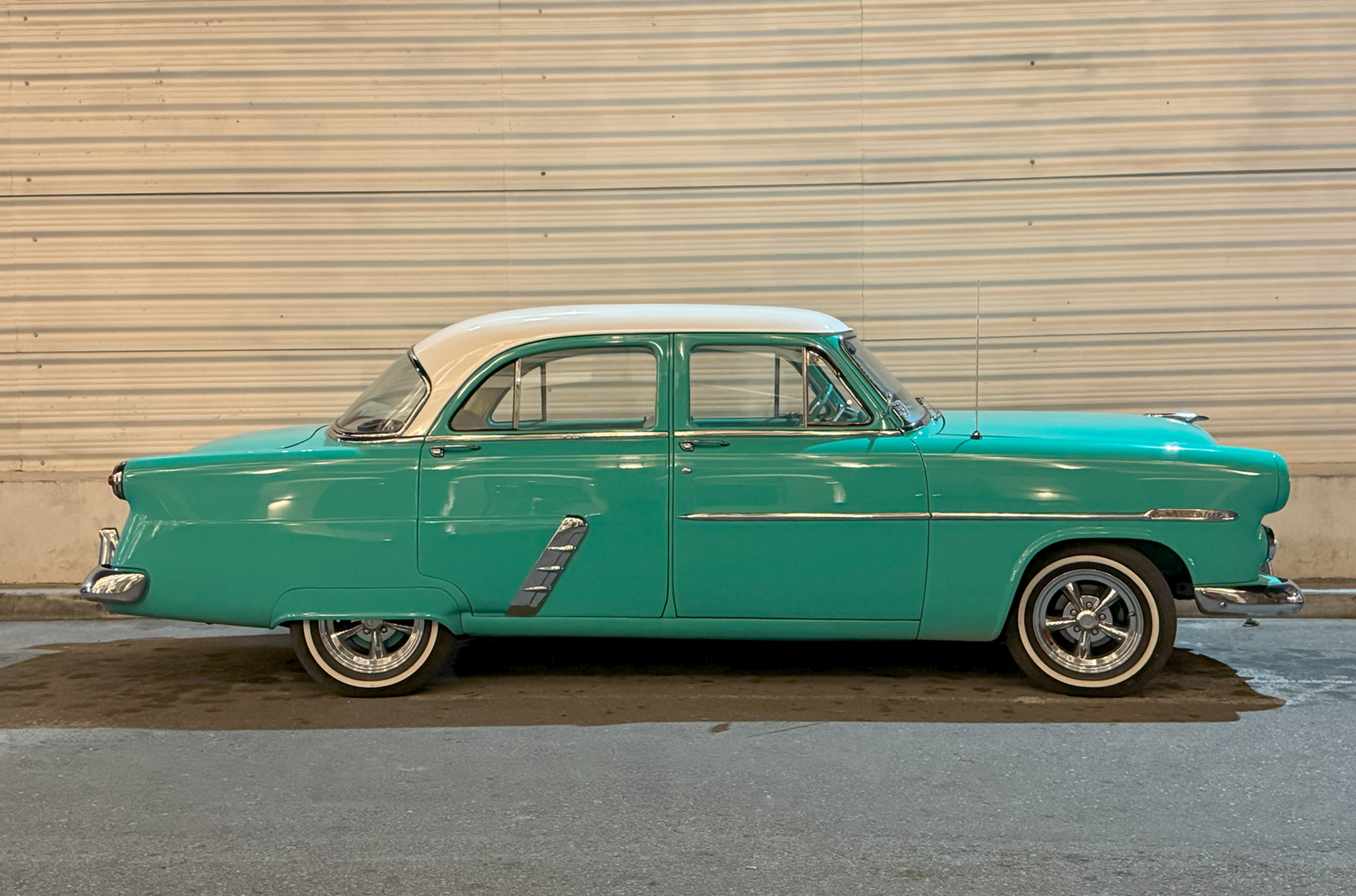
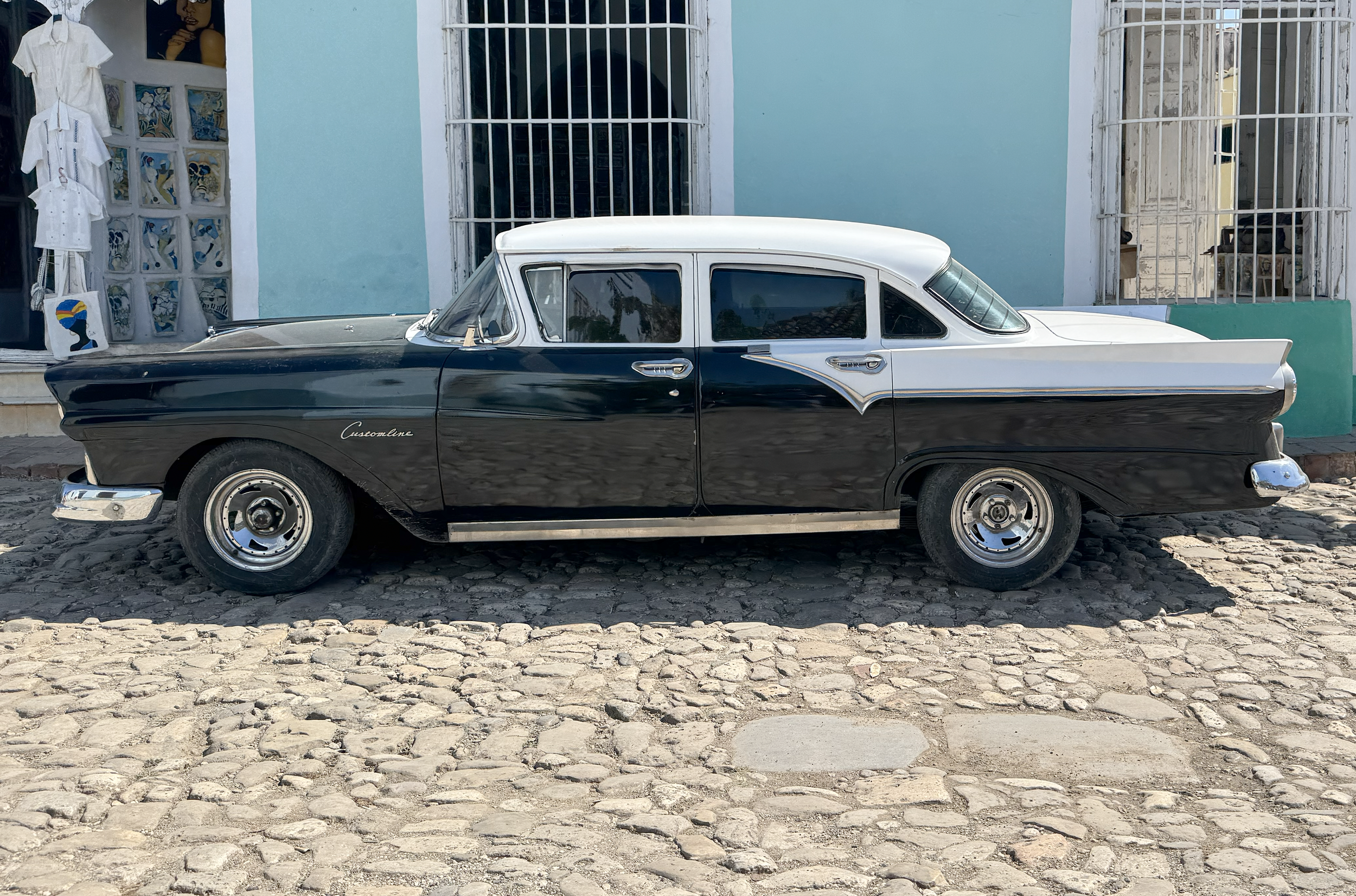
1953 Ford Customline sedan
Cubans resorted to cannibalizing other vehicles to save their own means of transport. Ladas made their way from the USSR and succumbed to the Cuban climate and their own poor production. Their mufflers, engines, and brake parts became artificial prostheses for the often-bump-started vehicles. As the embargo hardened, Castro’s governing ineptitude became more apparent and the USSR’s support wavered. Eventually, the USSR and Churchill’s Iron Curtain rusted away, leaving the Cuban rolling stock of Ladas and Moskvitches to do the same. Even the dreaded, garnet-colored Ladas used by the Cuban intelligence service were abandoned.
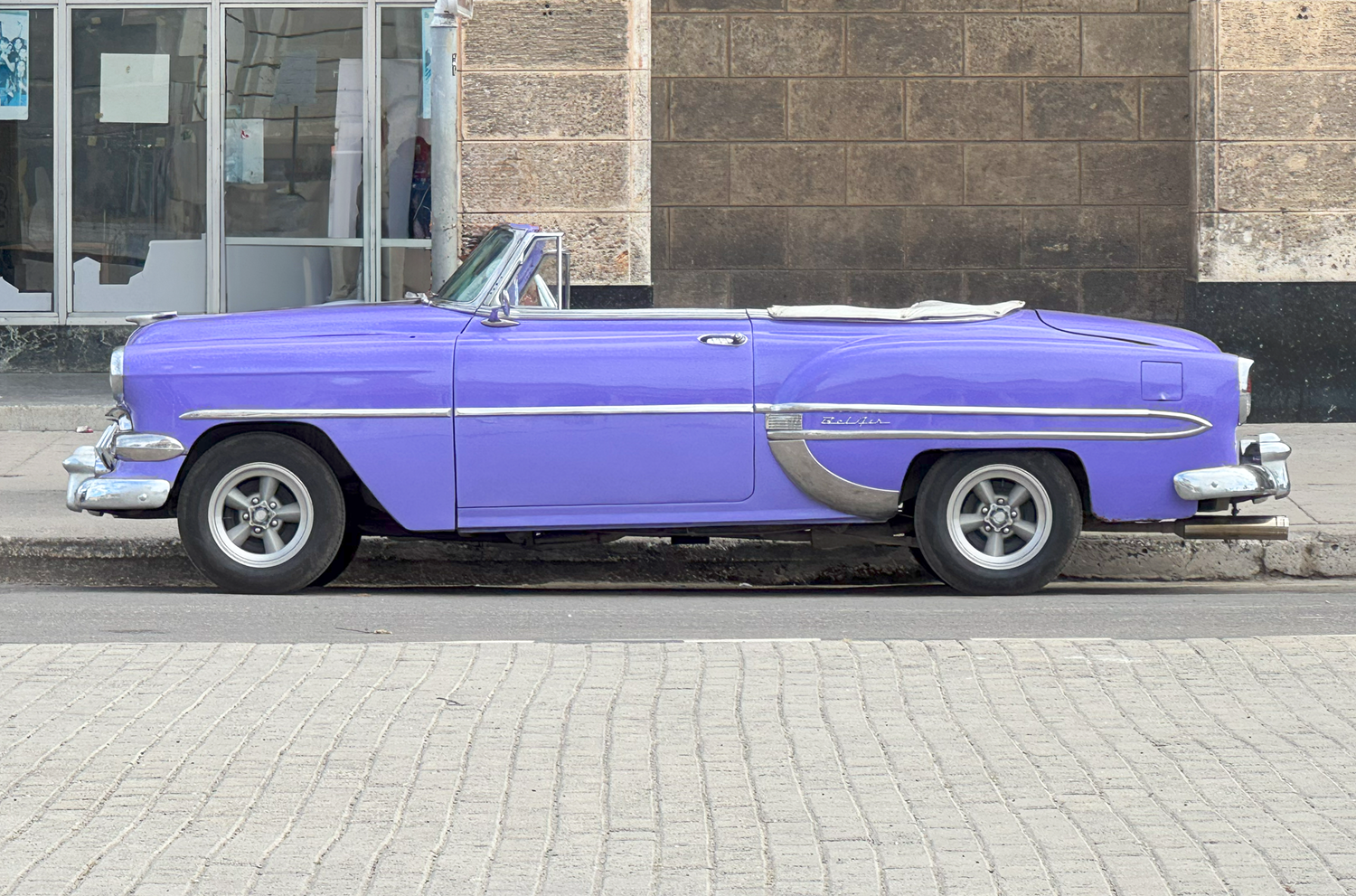
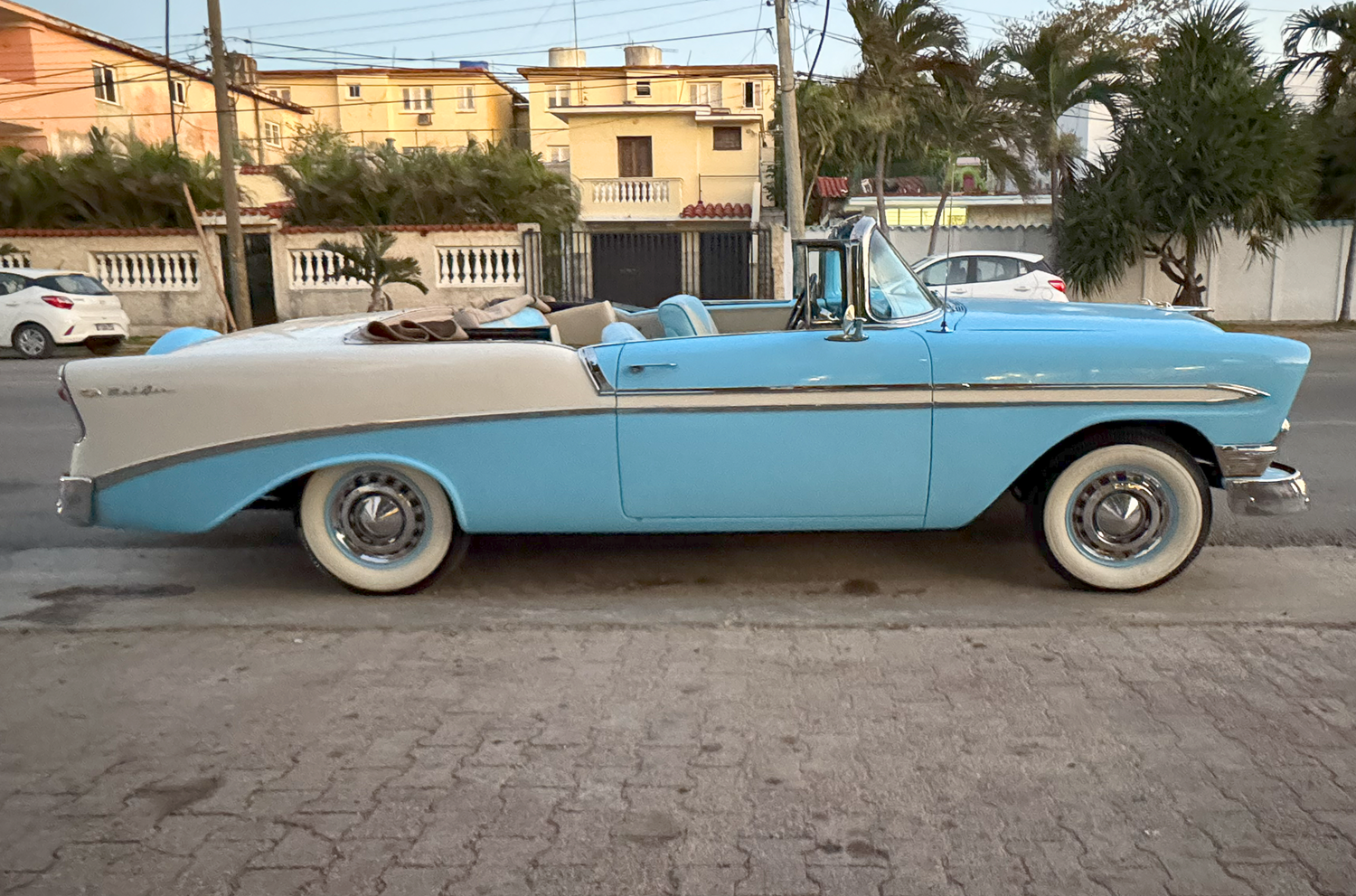
1953 Bel Air Convertible
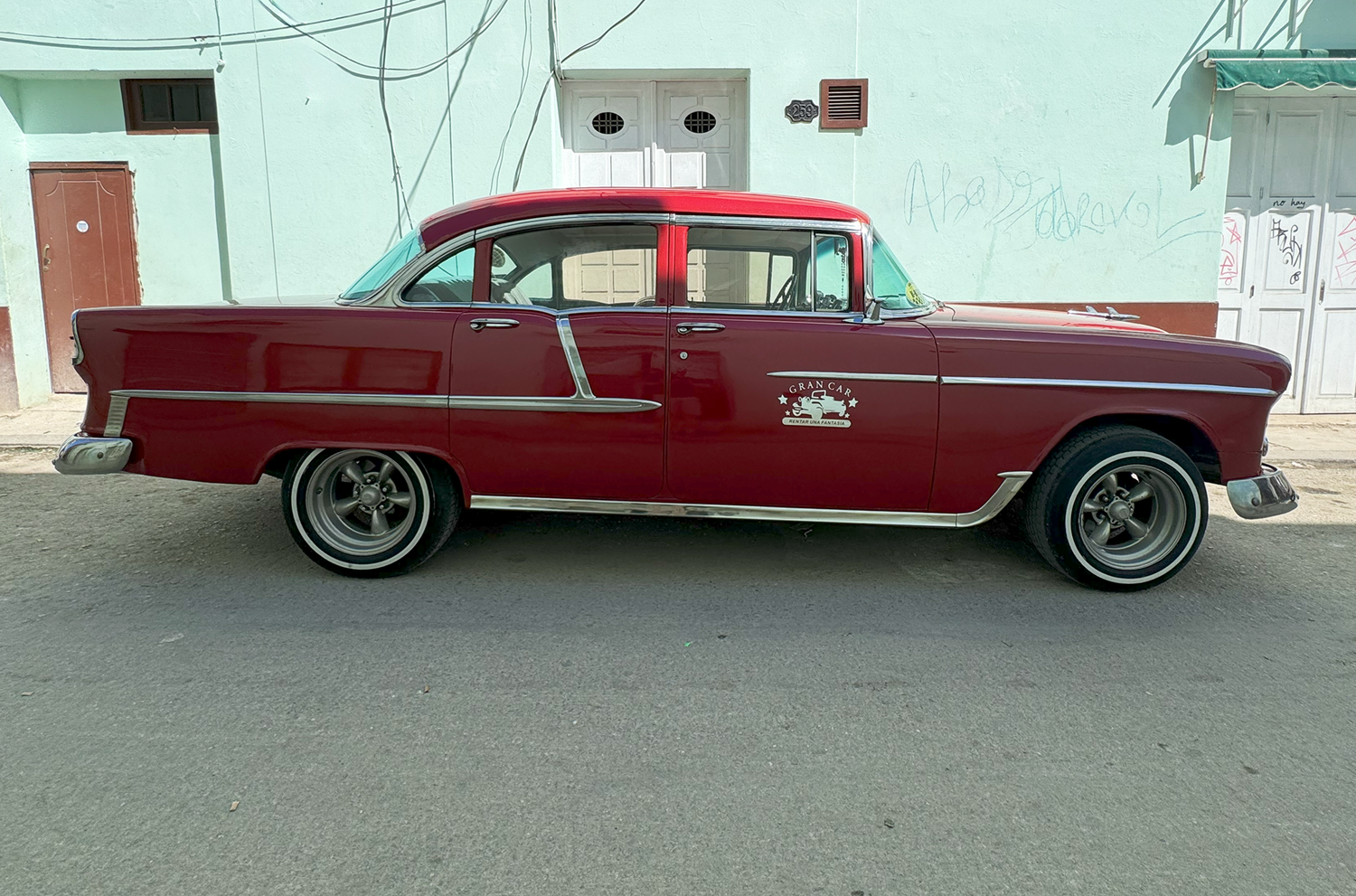
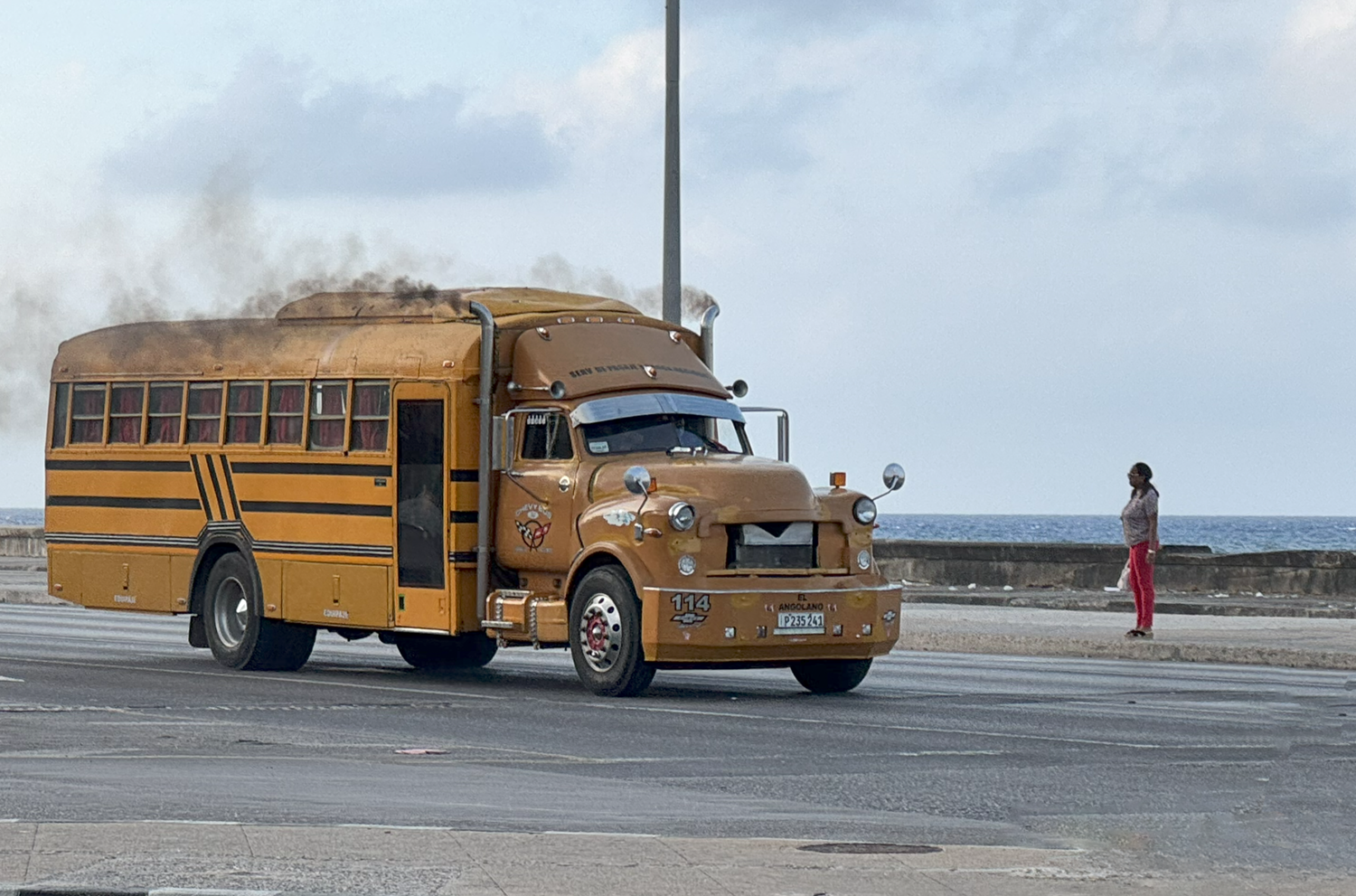
Refurbished, classic American cars eventually became iconic. Tourists, mostly non-American, were ferried around Havana in grand style while the urban context slowly began to crumble. Castro recognized the visual value of the pre-embargo American vehicles, despite the ironic metaphor for the country itself: bright and shiny on the outside but barely holding it together on the inside. Seeing cars leaving the country as collector’s items, in 2010 the regime instituted a law that prevented foreigners from exporting the cars. Cars can be purchased by and transferred to residents, but not many have the pesos to do so, despite ample remittances from family overseas. State-run taxi fleets, such as Gran-car, have emerged where drivers pay a monthly lease tax to operate the vehicles. These taxis are the “Yank Tanks” comprised of 1950s Cadillacs, Chevy Bel Airs, Plymouths, and DeSotos. A rolling fleet of nut-shaped, Cuban taxis called Almendrones serve the locals and chug their way through Havana’s streets, curb-called by a semaphore code of hand gestures that only locals can command.
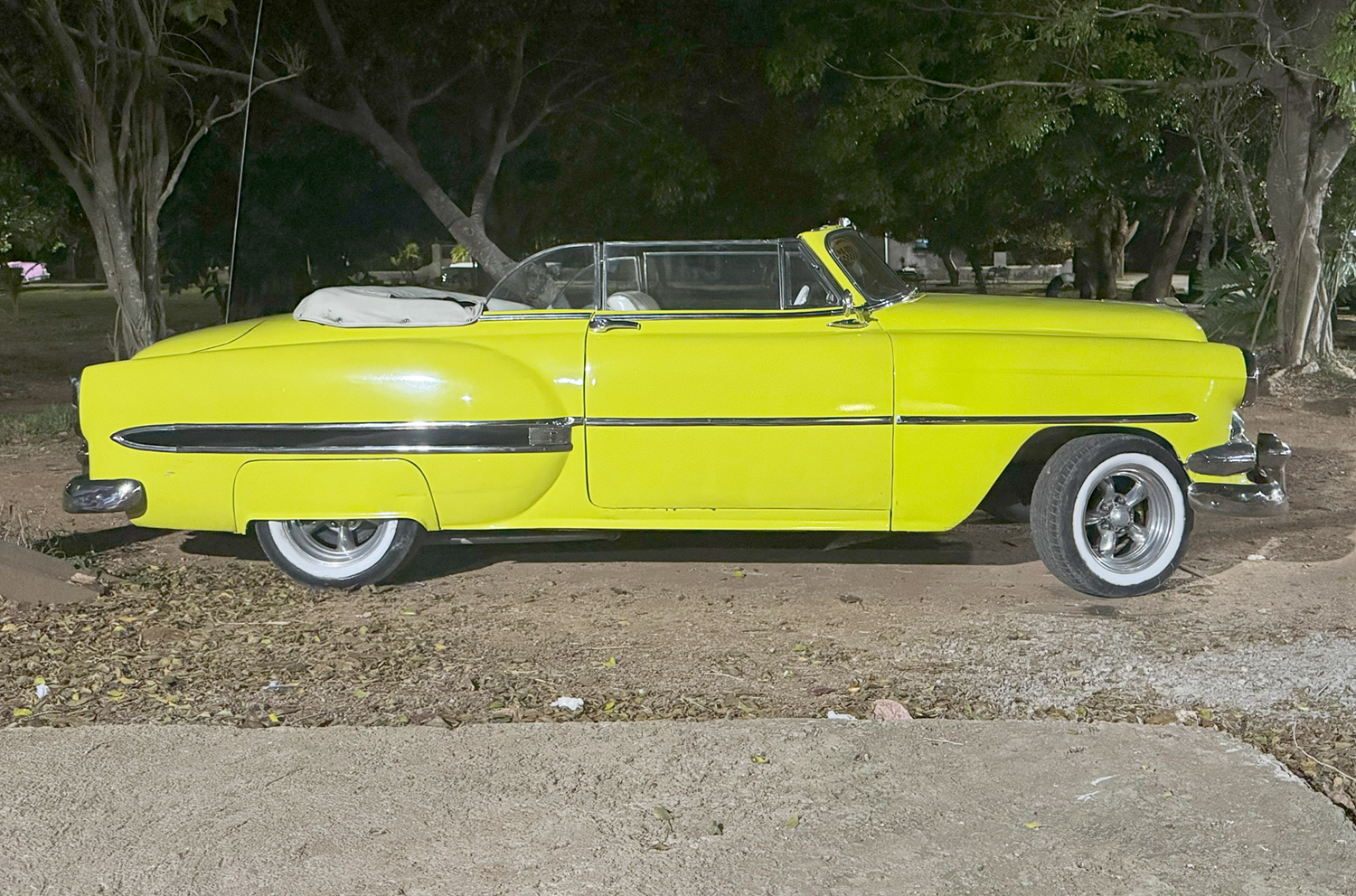
1954 Bel Air Convertible
Today, the 2010 law has eased somewhat, but the embargo and governmental incompetence remain. And tourists are still whisked around in converted convertibles whose engines sound as if they might explode at any moment. When regime change happens, the iconic cars will survive, but perhaps modified for electricity, hydrogen, or the fuel cell of the future. Their color-candied shells will serve as rusty reminders of the Cold War.
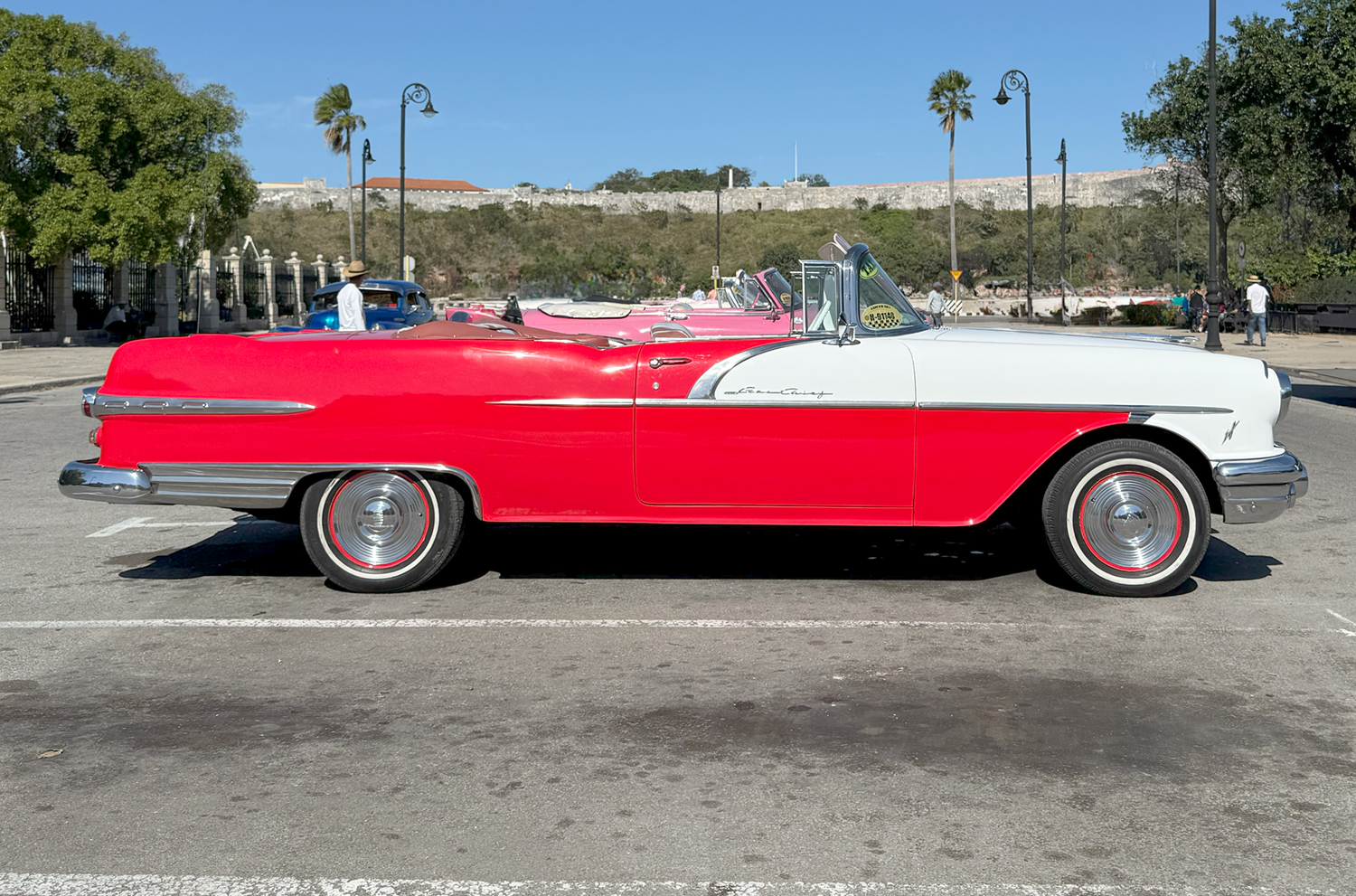
1956 Pontiac Star Chief
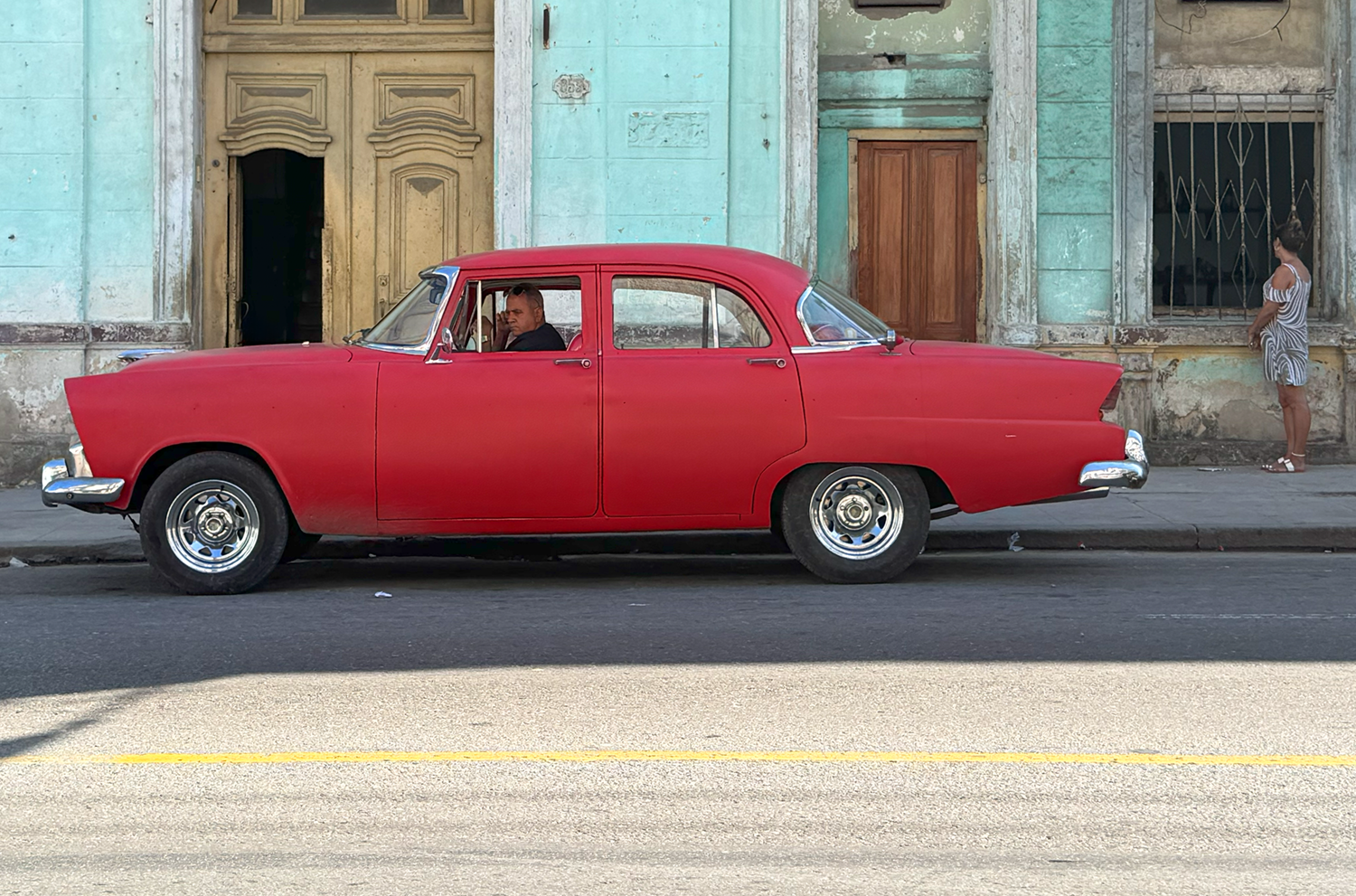
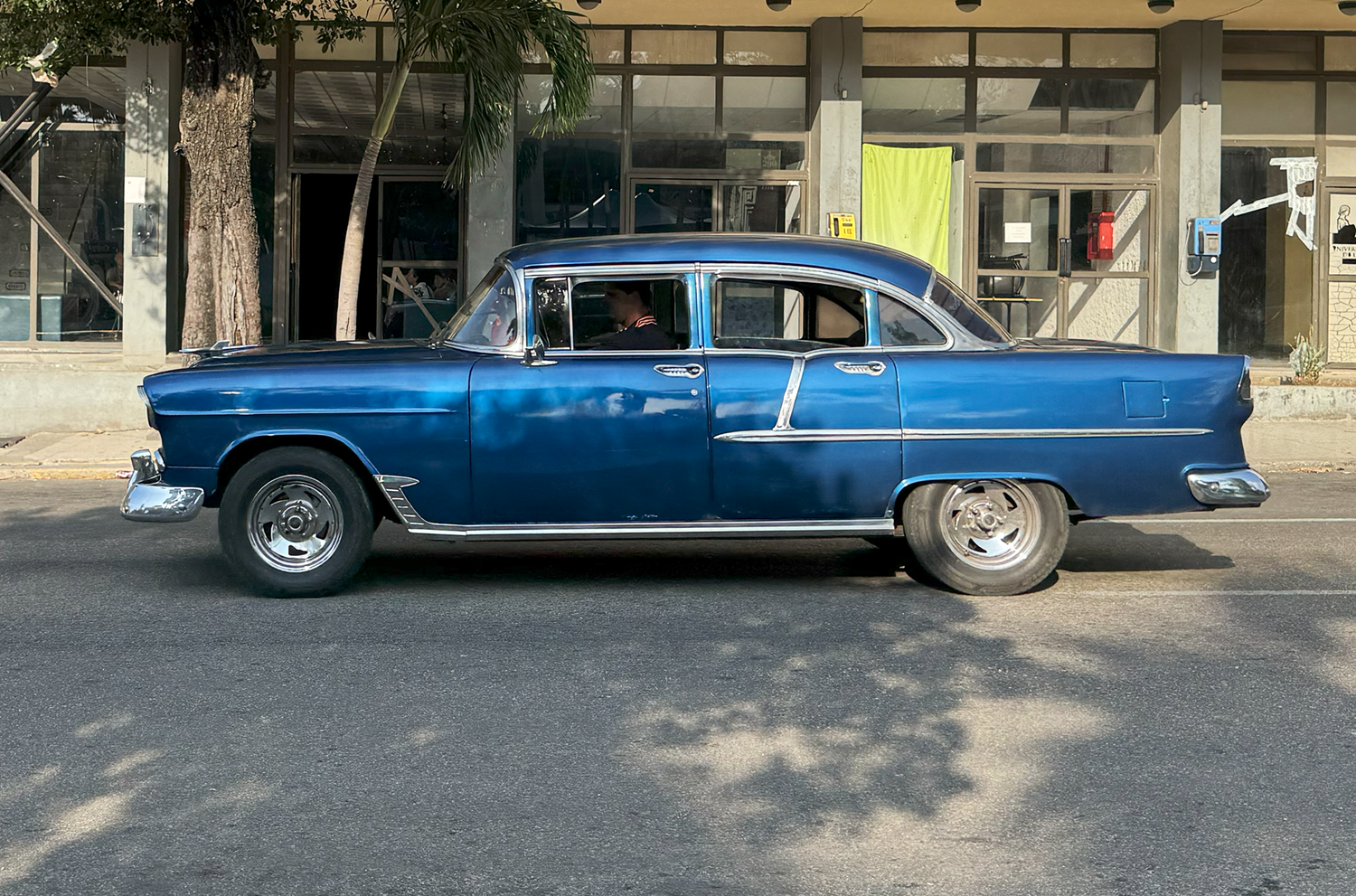
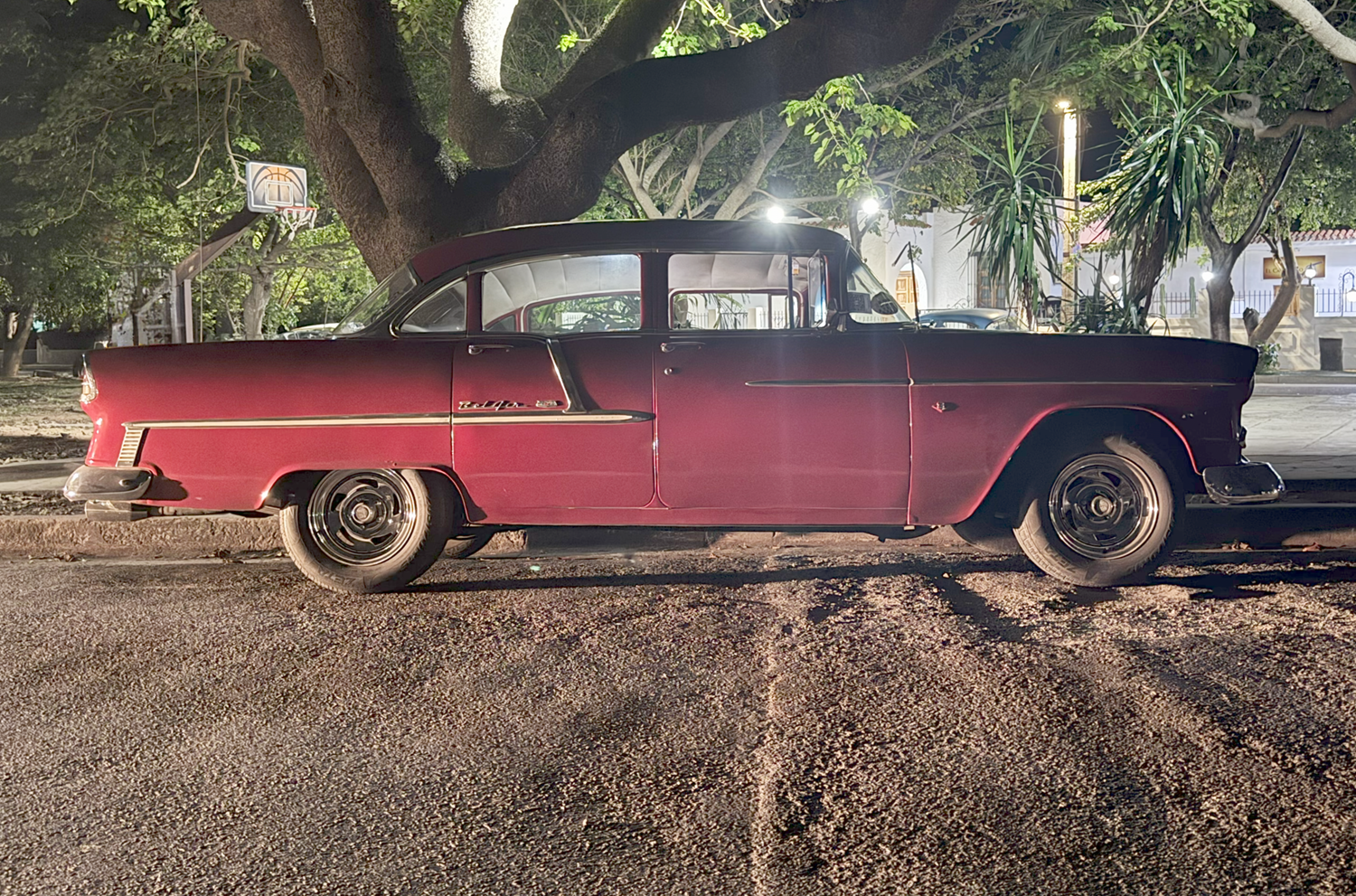
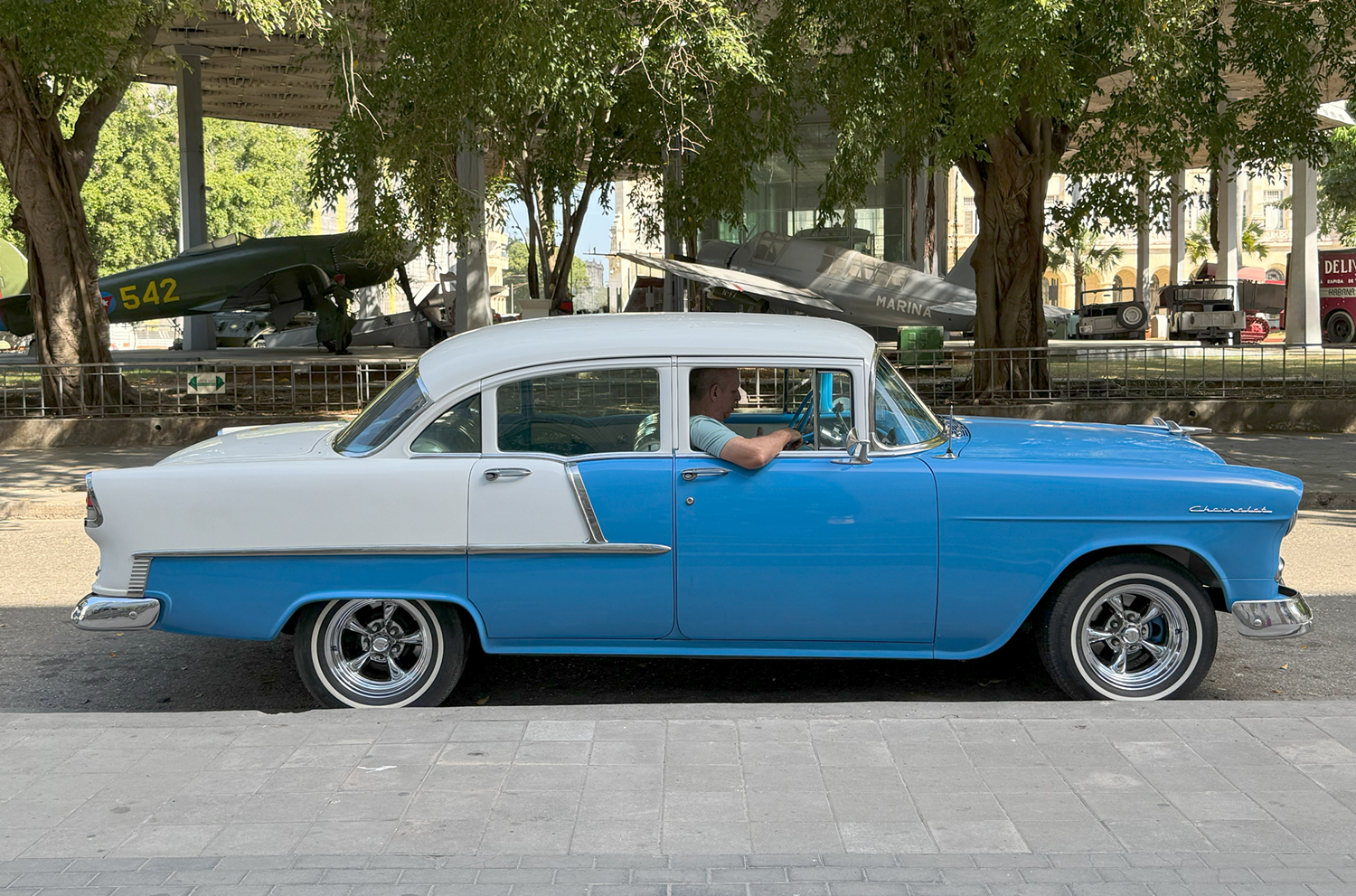
1955 Plymouth Belvedere
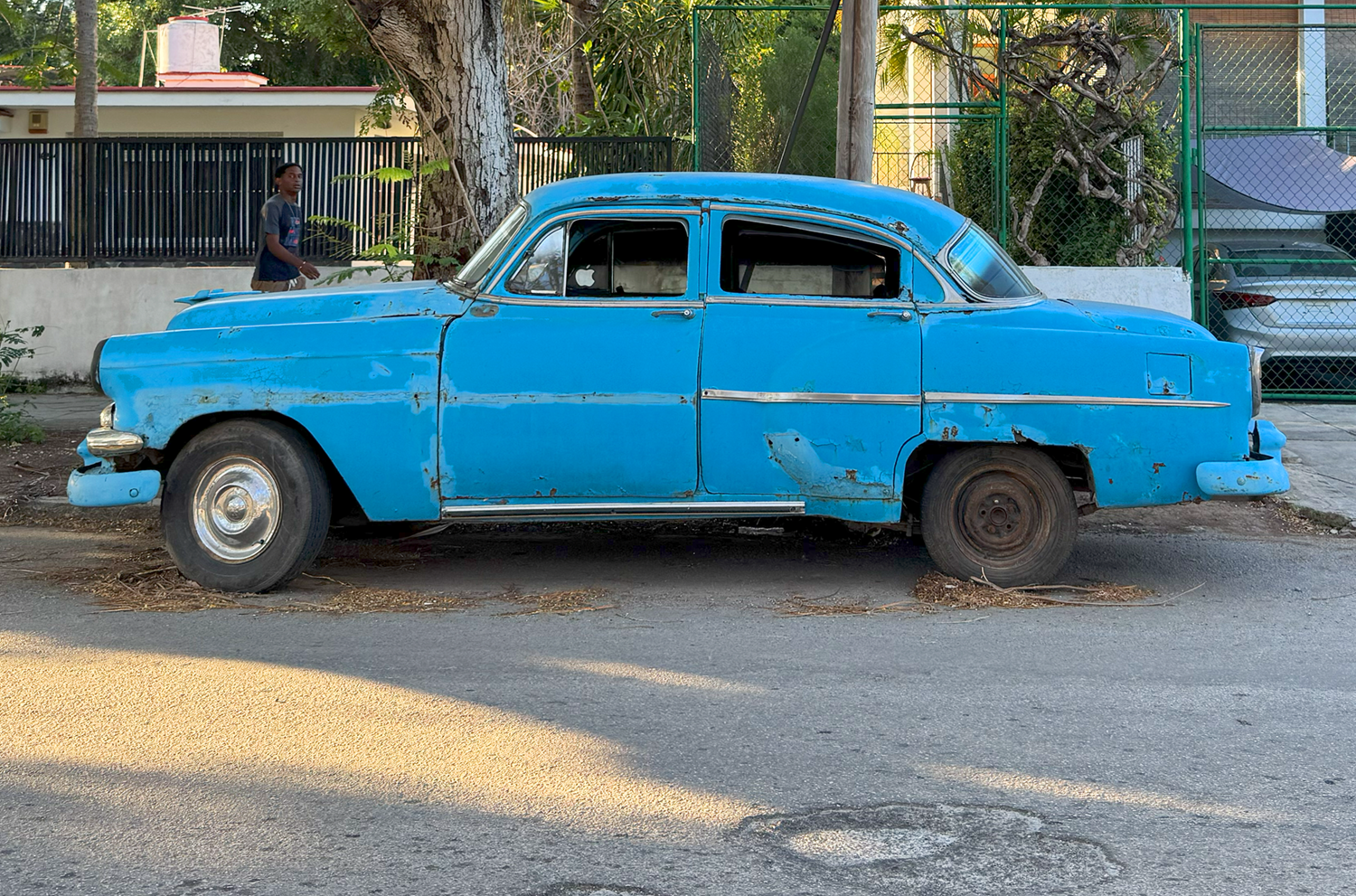
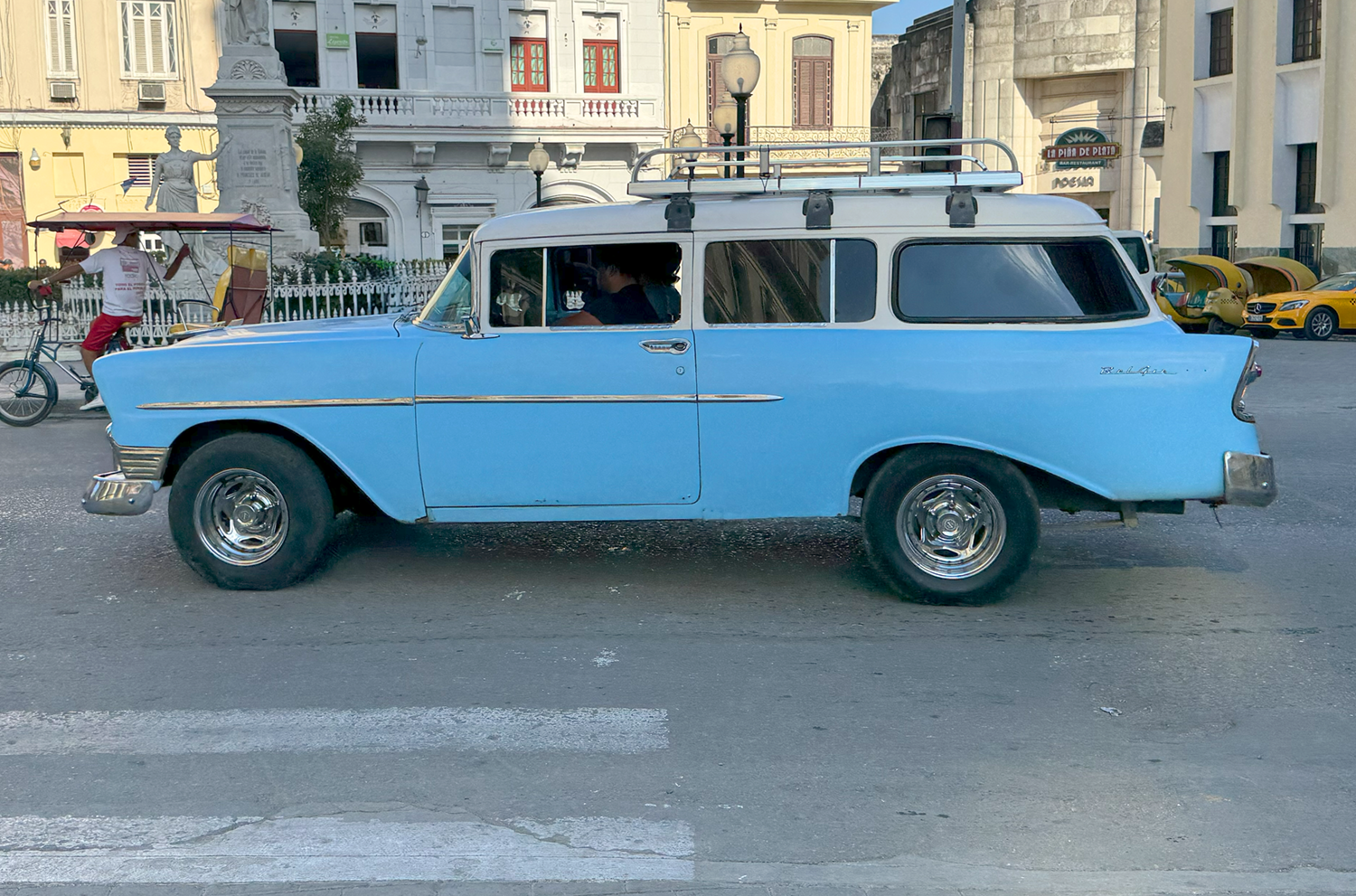
1954 Chevrolet 210
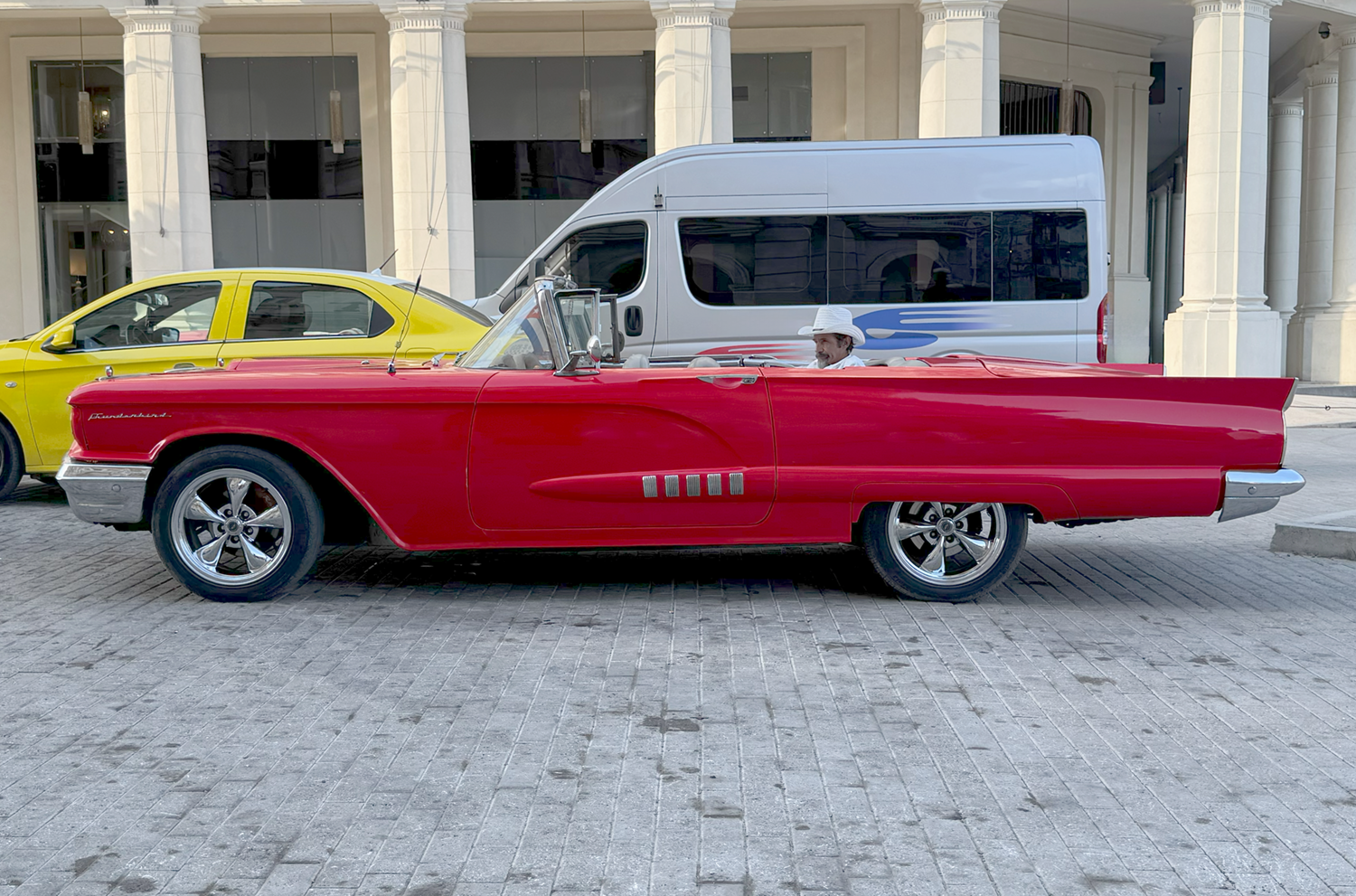
1957 Ford Thunderbird Convertible
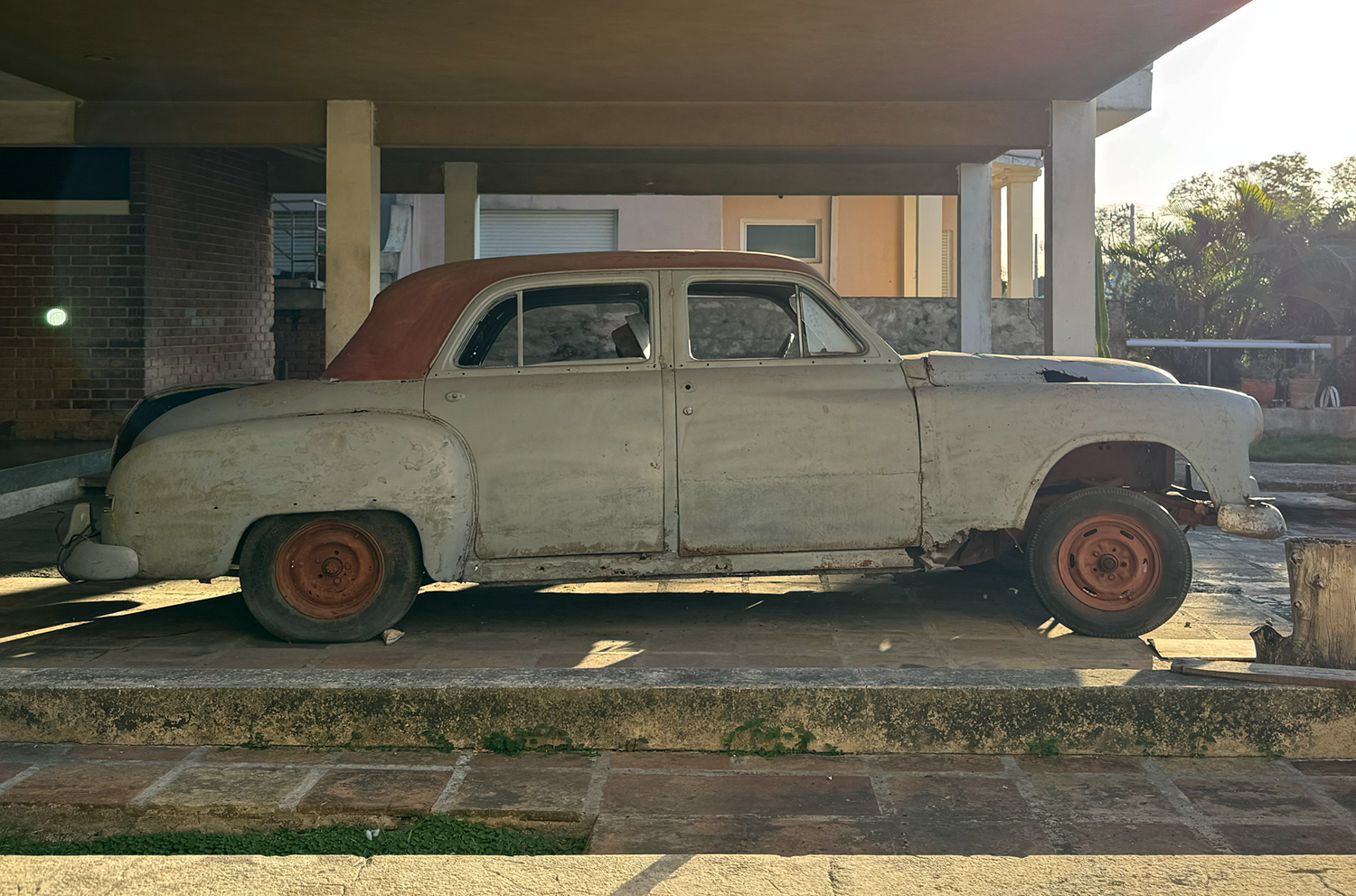
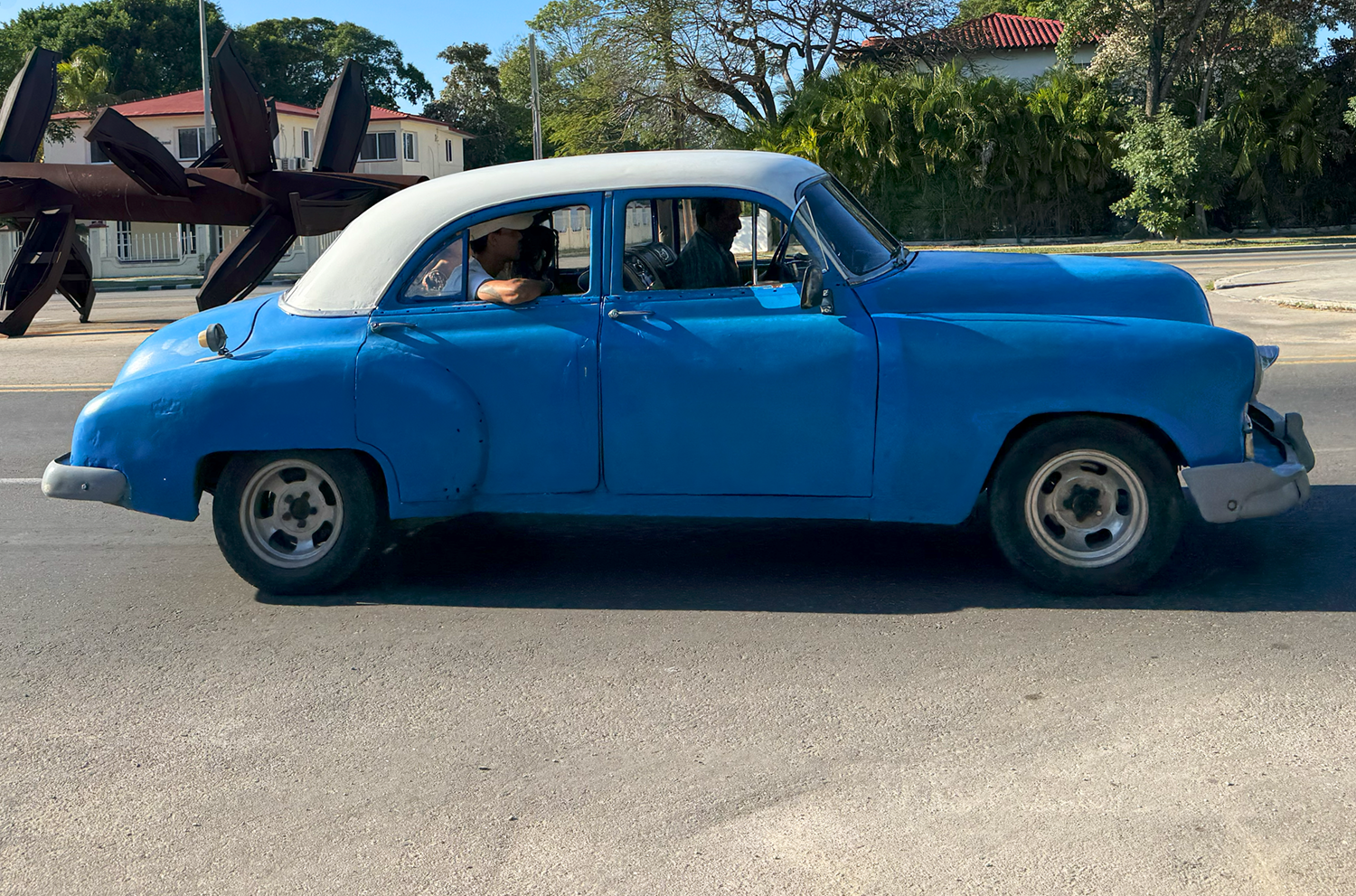
1951 Plymouth Deluxe
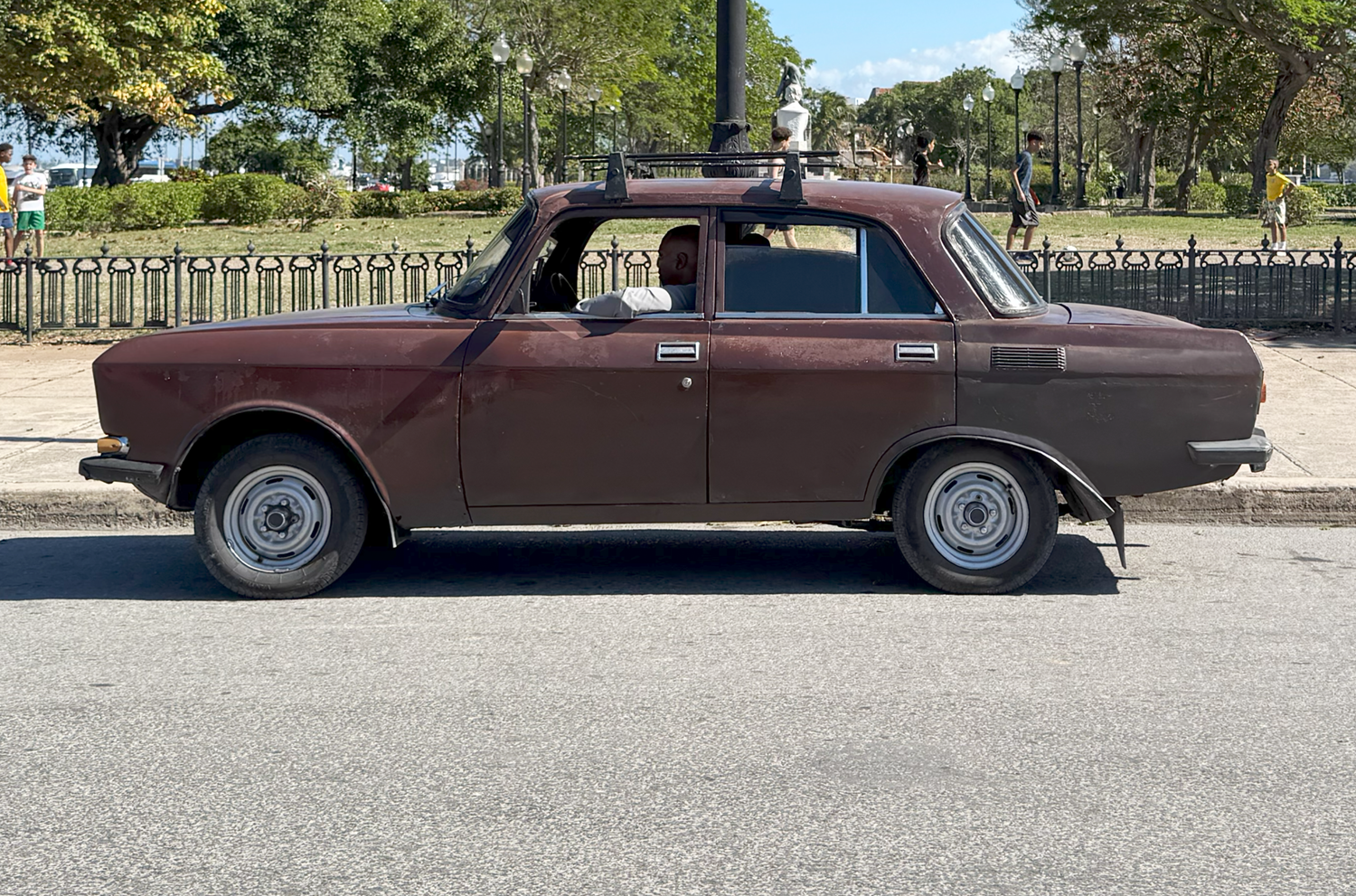
1975? Moskvitch 2140
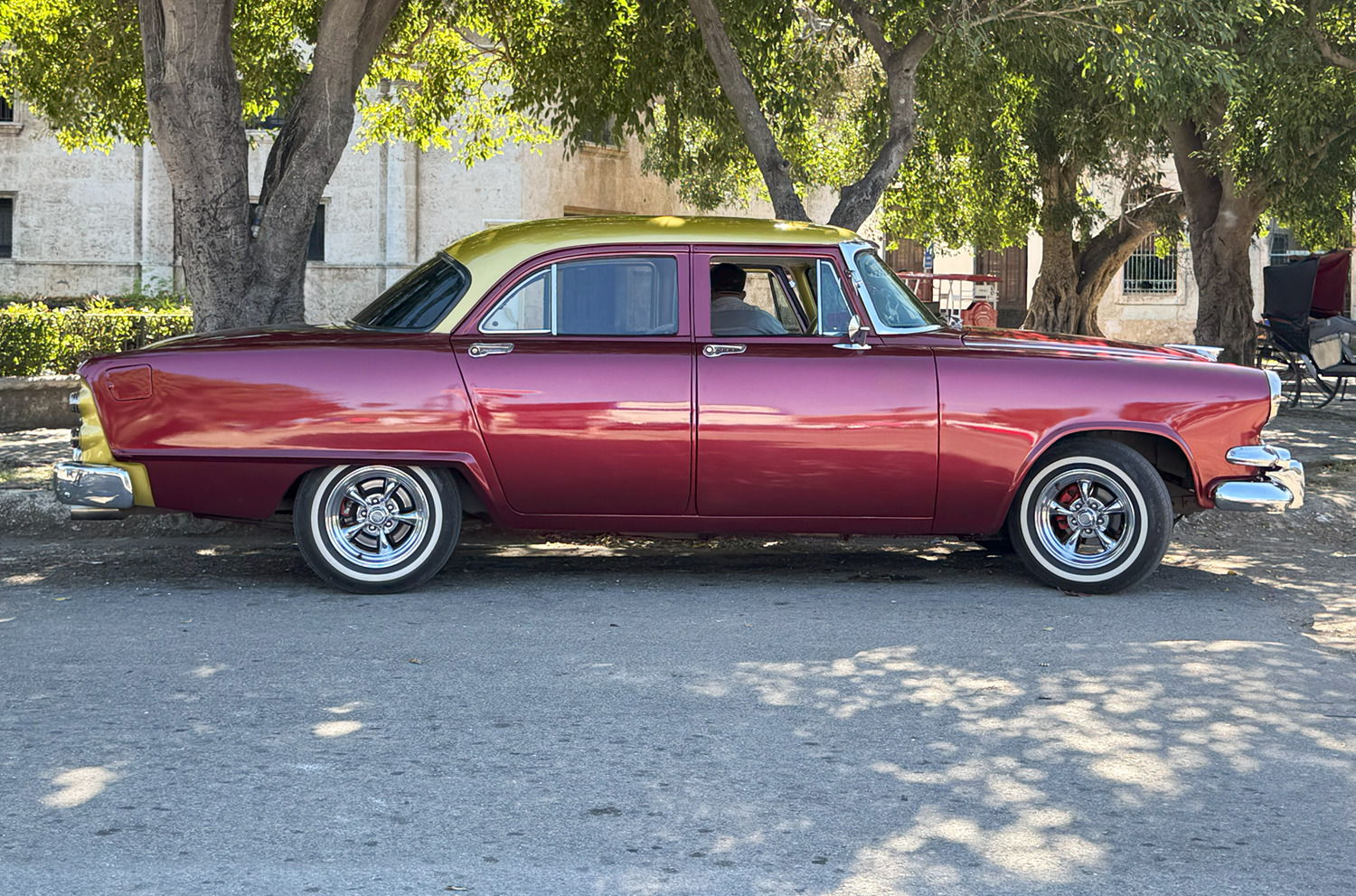
1955 Coronet Sedan
Mas maquinas
WANT THESE Maquinas as a 2026 CALENDAR? IF SO, DOWNLOAD IT HERE FOR FREE! LARGE FILE!
PRINTING INSTRUCTIONS FOR TOP LOADING PRINTERS-LOAD SEVEN LETTER-SIZED PAPERS (8.5X11) PORTRAIT/VERTICALLY ORIENTED IN YOUR PRINTER. PRINT THE ODD NUMBERS ONLY FIRST. ADOBE ACROBAT IS THE EASIEST WAY TO DO THIS. TAKE THAT PRINTED PACKET, FLIP IT OVER without rotating. PLACE THE PAGES BACK IN THE PRINTER. DO NOT SEPARATE THE PAGES! KEEP IT AS A PACK. THE BLANK SIDES SHOULD BE FACING YOU. now PRINT THE EVEN NUMBERS ONLY. SCORE THE CENTER LINES OF THE ODD SIDES. FOLD FOR A CRISP EDGE AND ARRANGE THE PAGES SO THEY MAKE THE CALENDAR IN ORDER WITH "HAPPY NEW YEAR ” AS THE COVER WHEN ASSEMBLED. JULY IS THE MIDDLE OF THE CALENDAR, THEN JUST STACK THE REMAINING MONTHS OF THE YEAR WITH THE COVER LAST. THIS IS THE EASIEST METHOD. THE CALENDAR SHOULD BE IN THE SAME ORDER AS THE IMAGES POSTED HERE. THEN FIND A WAY TO STAPLE THE CENTER AT THE ENDS OF THE CENTER LINE. STAPLE THROUGH THE COVER. THERE’S A CIRCLE AT THE TOP OF EACH PAGE FOR A PIN. WE SUGGEST HEAVY-WEIGHT PAPER LIKE BROCHURE OR CARD STOCK. SEND US A PHOTO OF YOUR HANGING CALENDAR WHEN COMPLETE TO INFO@RETHIKTANKDESIGN.COM. WE WILL RESPOND WITH A UNIQUE tombino.shop COUPON CODE. ENJOY!